
By Cara Strickland
Years ago, I spoke to a pastor friend as Easter approached. She hadn’t decided on the theme of her sermon, but at least one point was clear. “I’m going to make sure people know that Mary Magdalene wasn’t a prostitute,” she said.
Did these words surprise you? At that time, I had so often heard Mary Magdalene referred to as a sinful woman, and yes, a sex worker, that I never thought to question it. So, if that was not her story, then what was? I wanted to see what the Bible said.
I was surprised to find few references to her in scripture. She appears in each of the gospels, mainly at the same parts of their accounts of Jesus’ life and ministry, with some differences.
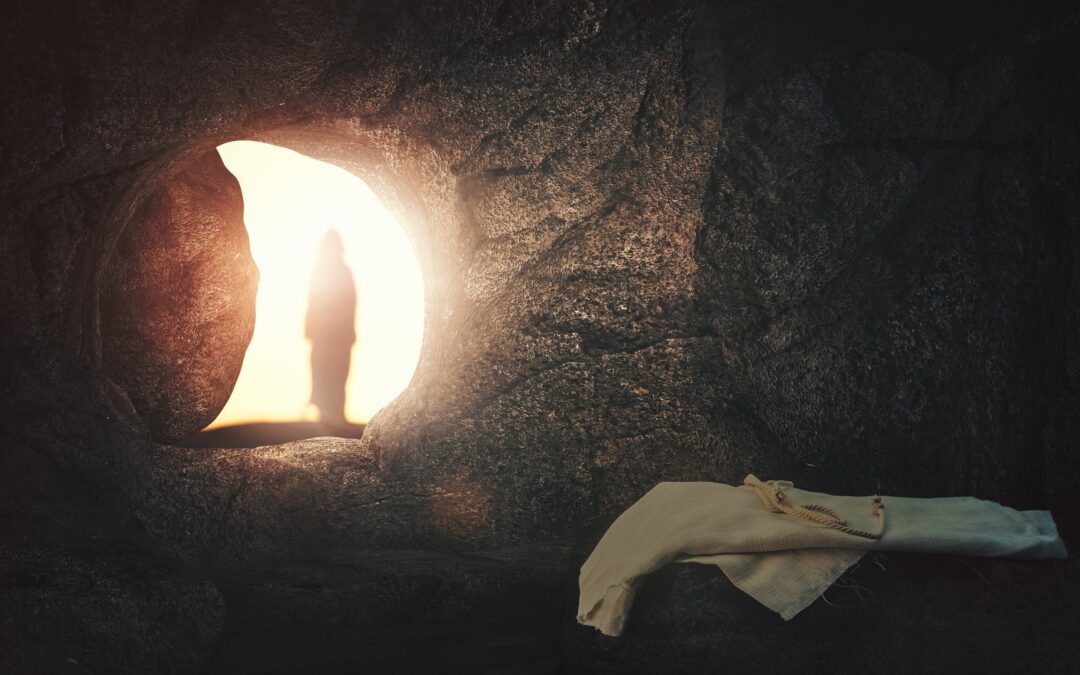
Put together, the gospel accounts tell this story: Mary Magdalene had begun following Jesus in Galilee. Jesus cast seven demons out of her. Along with other women, she used her resources to provide for Jesus and his followers. With some of these women, she watched Jesus suffer and die on the cross. We know from John’s gospel that the group was close enough for Jesus to see and speak to them. Mary Magdalene discovered where Jesus was buried and made her way to the tomb soon after the resurrection. She encountered angels. Jesus entrusted her to tell his beloved disciples the news. Beyond this, we know nothing about Mary Magdalene.
But what we do know is astonishing. While the gospels are unclear about exactly which, if any, women accompanied her to the tomb, she is always mentioned. The angels appear and speak only to the women, although at least one account mentions that some disciples came to look around. Mary (with other women followers) was the first to see Christ risen. He gives her the supremely important task of delivering the good news to his disciples.

Jesus could have chosen anyone, of any gender, to entrust with the news of his resurrection. But he did not. He chose Mary Magdalene, who had been following him, believing in him and sharing her resources with him for so long. It matters that he chose her, just as all the people he chose mattered. Many of the people Jesus chose were also not the obvious choices for honor and leadership.
According to the gospels of Mark and Luke, the disciples discounted her words, not believing the good news she and the other women shared. Did they doubt that Jesus would trust a woman with this task—even after all they had seen?
I do not know if it was sexism that prompted Pope Gregory in the year 591 to give a series of sermons on Mary Magdalene. Regardless, he is the person who introduced the idea that Mary Magdalene was sinful, and that her sin was sexual in nature. Not only did he assert that all those seven demons pointed to sin, but that she was an unnamed woman mentioned in all the gospels who anointed Jesus with perfume, which he supposed was a way to cover the stink of the sex trade. But there was no reason to identify the woman as Mary Magdalene. There was also no reason to associate the unnamed woman with prostitution. In 1969, the Catholic Church formally apologized for this assertion, but the damage was done.
No matter what people believe about Mary Magdalene, it does not change who she was. I grew up hearing that Magdalene referred to the place she was from, but scholars are finding that this does not add up. Instead, it makes sense that “Magdalene” was a reference to magdala, the Aramaic word for “tower.” The disciple Peter was referred to as the Rock. It is not a stretch to consider that Mary was the Tower—a strong and important person in the early church, often called the apostle to the apostles. Mary Magdalene deserves her place with the other disciples, along with others who were omitted, forgotten or mischaracterized. May we choose to follow her example.
Cara Strickland is an award-winning writer. Her work has appeared in the Washington Post, Salon, Southwest, Time Out, Atlas Obscura, JSTOR Daily, the Rumpus and others. Connect with her at carastrickland.com.
This article appeared in the Summer 2026 issue of Gather. To read more like it, subscribe to Gather.