
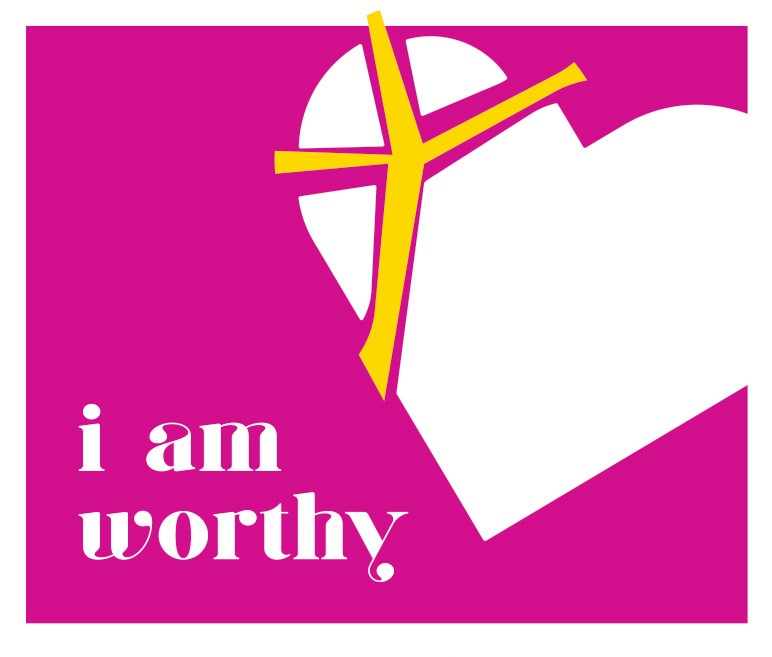
This summer, Women of the ELCA participants will gather in Des Moines, Iowa, under the theme “I am worthy.” When Nobel Peace Prize winner Leymah Gbowee spoke in 2017, she invited WELCA participants to reclaim space for women and girls to lead and love in bold ways. This three-part Bible study will help us to define who we are, what we can be, and what we do in the world, in light of our God-given giftedness, identities and relationships.
(June 2026) “I am created in God’s image. No matter what anyone else says.”
We’ll begin with the story of God’s creation and the “very goodness” that is spoken over every human being. The study will then turn to various scripture texts that have been used to undermine, silence and degrade women for centuries. Unpacking the ways these verses have been read against women shines a light on the realities of sexism and the ways that, for too long, the Bible has been used to prop up the oppression of women. But we will also hear how those same scriptures can be read as invitations to new freedom, community and vocation for people, regardless of gender, for all people were made in God’s image.
(July 2026) “I am more than one thing: Honoring our many identities.”
In her TED talk, “The Danger of a Single Story,” Chimamanda Ngozi Adichie names this truth: We are much more than one thing. All of us have intersecting identities, roles and responsibilities. Beyond our ethnicity, the color of our skin or our birthplace, we may also be a sister, a mother, a daughter, a friend. We have various vocations, hobbies and joys.
In this session, we’ll explore how the multiple identities of several women in Scripture shape their faithful living. Esther is not just a queen, but a niece, as well as part of an oppressed community of faith. Ruth is so much more than just a widow. Mary Magdalene has more identities than can fit within the allowed word count of this paragraph. So do you!
(August 2026) “I am because you are: We need one another.”
Our individual identities are always bound up in community. Jesus describes this vision using a vine and branches. Paul talks about a body with many parts. The prophets describe communities of liberative interdependence.
Archbishop Desmond Tutu describes this way of mutual interconnectedness as “Ubuntu,” where “my humanity is caught up and bound up inextricably with yours. I can only be fully me if you are fully you.”
In delving into Scripture, we learn how no one can flourish unless everyone does, and how our lives are bound up with one another and the planet.