
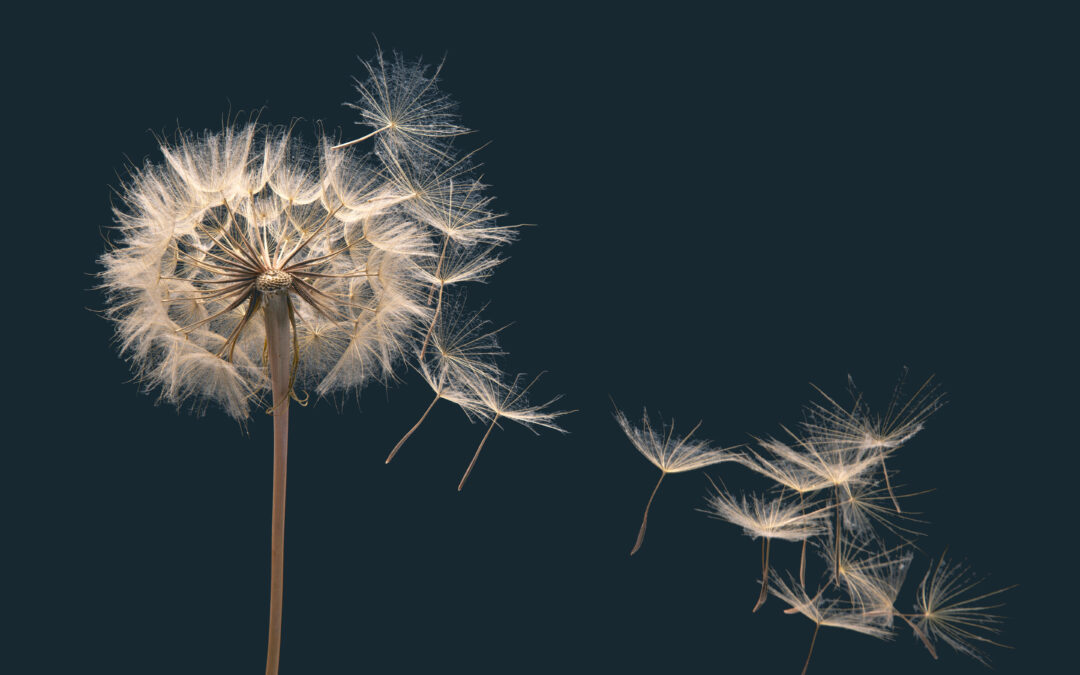
At any given moment, we are carrying around at least six different varieties of seeds. Yes, seeds. Biologists observe that our bodies—being part of the ecosystems in which we live— participate in the dispersion of local plant life by unknowingly harboring and transporting seeds on our bodies.
We get dressed in the morning and go about our day, assuming we have chosen what we’re wearing and how we move through the world. Even with all that agency, we remain mammals in a natural world. We are connected to all other living things and to their hopes, dreams and desire to survive. Some of those living things are plants that are all too pleased to catch a ride on our busy bodies.
When we cross borders or enter another country through an airport, authorities will stop us to ask, “Do you have anything to declare?” This would probably not be the time to poetically expound on the unwitting way we tote seeds around on our person. “Well, y’know, officer…”
We cross different kinds of borders when we come together with family members and friends. These thresholds have tensions of their own. Here, too, we carry a lot with us, much of it unknown. The things we carry—memories, stresses and traumas, as well as skills, dreams and joys—shape who we are and how we show up together. While literal border crossings are becoming more frightening and more threatening all the time, the borders we traverse within our own families can also take on the textures of fear and anxiety. For many, it is a daily challenge to resist living in threat mode.
Like the seeds hiding in our shoes and sweaters, we also want to survive. We want to live, to see the future, to grow and bear fruit. Entering into conversations with our loved ones, when that may involve interactions across a difference of opinion or political commitments, is a profound affirmation of mutual survival. When we do this as people of faith, as people claimed and shaped by the love of Christ, we can ask: How do we all flourish here? How do we all make it through this hour of tumult and fear? And even more: How do we notice Christ at work in our gatherings to help us be fully human together?
Do you have anything to declare? Oh, yeah, we do. We all have principles, ideas and values we seek to live by. One way out of threat mode is to remember our principles. What do we want to declare with our lives? Defining ourselves in this way is a good first step toward enjoying a family gathering where people of opposing ideas or commitments will be at the table together.
Take a slip of paper and a pencil and write out a few of your life principles or values. Keep this handy as you navigate the holidays. Read it with a loved one and talk about times you felt challenged to keep these principles.
Just as important as our own act of self-definition is cherishing the truths that have been given to us, spoken as powerful promises for all time. What do we have to declare? In the end, only that which was declared over us: that we are beloved children of God, holy and precious, forever. And so is the person with whom we deeply disagree. That baptismal dignity, that unquestionable worth, and that call to love and serve others will be a radical, beautiful entry point into hard conversations.
What keeps us connected to and aware of those baptismal promises, especially in the heat of a Thanksgiving dinner conversation that becomes tense? Perhaps this is a time to be intentional about what we carry, literally. Consider placing a river rock in your pocket to remind you of your baptism, a rosary or string of prayer beads to remind you to pray, a mantra on your tongue or in your heart to remind you to keep breathing. These tangible items help us to process the more hidden things we carry, knowingly or not, and allow us to be present in the moment.
Tethered to the death and life of Jesus, fed at his banquet table, we are free to wonder: What can I learn today? How can I love today? And what am I unwittingly carrying around that might be a resource or seed for future flourishing—even if I can’t immediately see it?
Liv Larson Andrews is a pastor, writer and artist. She lives with her spouse and two children in Spokane, Washington, and serves as director for evangelical mission for the Northwest Intermountain Synod.
This article appears in the September/October/November 2025 issue of Gather. To read more like it, subscribe to Gather.